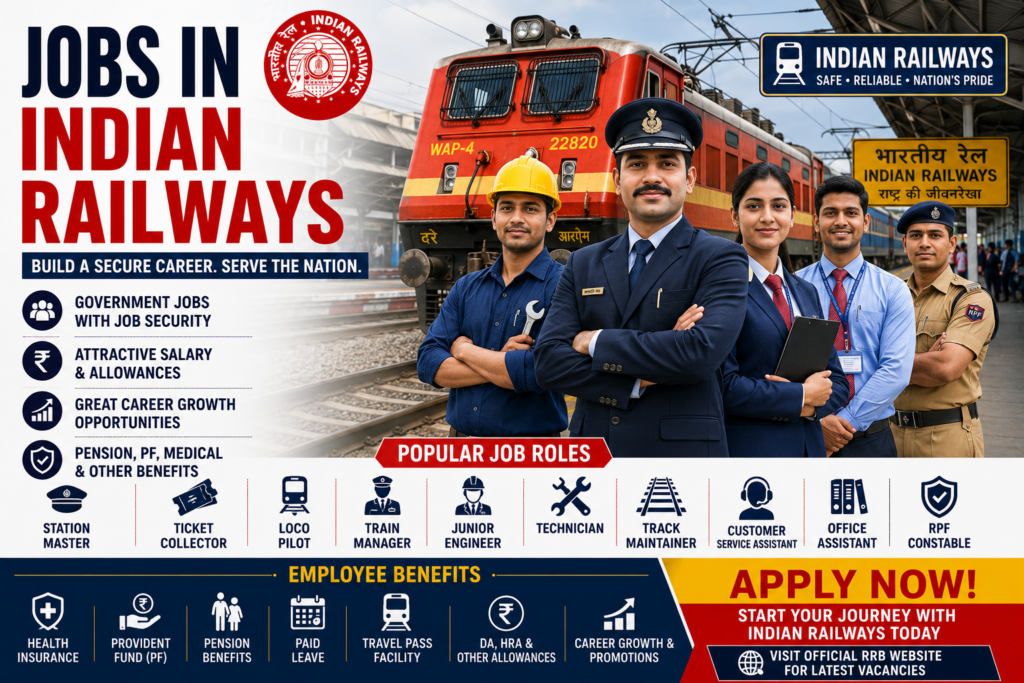
Jobs in Indian Railways 2026 continue to be among the most sought-after career opportunities in India. Every year, thousands of vacancies are announced across technical, operational, administrative, maintenance, and support departments, attracting freshers and experienced professionals from different educational backgrounds.
Indian Railways is one of the world’s largest railway networks and one of India’s biggest employers. The continuous expansion of railway infrastructure, electrification projects, high-speed rail development, and station modernization creates thousands of new employment opportunities every year.
This complete guide explains Jobs in Indian Railways 2026, including common job roles, salary details, eligibility requirements, employee benefits, required documents, career growth opportunities, and the complete application process.
What Are Jobs in Indian Railways?
Jobs in Indian Railways include technical, operational, engineering, administration, customer service, maintenance, ticketing, and safety positions. Employees work together to ensure safe railway operations, passenger services, freight transportation, infrastructure maintenance, and railway administration across India.
These jobs are suitable for 10th pass, 12th pass, ITI candidates, diploma holders, graduates, engineers, and experienced professionals looking for stable long-term careers.
Why Jobs in Indian Railways Are in Demand in 2026
Indian Railways continues investing in new railway lines, station redevelopment, electrification projects, dedicated freight corridors, and modern train technologies. These developments have significantly increased recruitment across multiple railway departments.
Jobs in Indian Railways remain in demand because:
- Expansion of railway infrastructure
- New station redevelopment projects
- Growing passenger services
- Railway modernization initiatives
- Attractive salary packages
- Government employment benefits
- Long-term career stability
Indian Railways remains one of India’s largest public sector employers, offering excellent career opportunities every year.
Common Indian Railways Job Roles
Station Master
Station Masters supervise station operations, coordinate train movements, and ensure passenger safety. They play an important role in maintaining efficient railway services and handling daily station activities.
Key Responsibilities
- Manage station operations
- Coordinate train schedules
- Assist passengers
- Handle emergencies
- Prepare operational reports
Ticket Collector (TC)
Ticket Collectors verify passenger tickets during travel and ensure railway ticketing rules are followed. They also assist passengers with travel-related enquiries and provide necessary guidance.
Key Responsibilities
- Check passenger tickets
- Assist passengers
- Verify travel documents
- Maintain ticket records
- Report ticket violations
Train Manager (Guard)
Train Managers supervise train operations during journeys. They coordinate with locomotive pilots and station staff to ensure trains operate safely and according to schedule.
Key Responsibilities
- Monitor train operations
- Coordinate with railway staff
- Maintain travel safety
- Report operational issues
- Prepare journey reports
Loco Pilot
Loco Pilots operate passenger and freight trains while following railway safety procedures. They monitor locomotive systems and ensure safe train operations throughout the journey.
Key Responsibilities
- Operate locomotives
- Monitor train systems
- Follow safety rules
- Report technical issues
- Maintain operating records
Junior Engineer
Junior Engineers inspect railway infrastructure, electrical systems, tracks, bridges, and signaling equipment while supporting maintenance and development projects.
Key Responsibilities
- Inspect railway systems
- Support maintenance work
- Prepare technical reports
- Monitor infrastructure
- Follow safety standards
Technician
Railway Technicians maintain electrical, mechanical, and signaling equipment used throughout the railway network. Their work helps ensure uninterrupted railway operations.
Key Responsibilities
- Repair equipment
- Perform maintenance
- Replace damaged parts
- Test railway systems
- Maintain service records
Track Maintainer
Track Maintainers inspect railway tracks and ensure they remain safe for train movement. They perform routine inspections and maintenance according to railway standards.
Key Responsibilities
- Inspect railway tracks
- Repair damaged sections
- Monitor track conditions
- Maintain safety standards
- Report maintenance issues
Customer Service Assistant
Customer Service Assistants guide passengers regarding train schedules, ticketing, platform information, and railway services while ensuring a smooth travel experience.
Key Responsibilities
- Assist passengers
- Provide travel information
- Resolve enquiries
- Support ticketing services
- Handle customer complaints
Office Assistant
Office Assistants support railway administration by maintaining records, preparing reports, managing files, and coordinating communication between departments.
Key Responsibilities
- Prepare reports
- Maintain office records
- Handle documentation
- Support administration
- Coordinate departments
Railway Protection Force (RPF) Constable
RPF Constables protect railway passengers, stations, and railway property. They maintain security, prevent crime, and respond quickly during emergencies.
Key Responsibilities
- Maintain railway security
- Patrol railway stations
- Protect passengers
- Report security incidents
- Support emergency operations
Jobs in Indian Railways Salary 2026
Salary depends on the job position, qualifications, experience, and pay level. Employees also receive government allowances and additional benefits according to railway policies.
| Job Position | Average Monthly Salary |
|---|---|
| Station Master | ₹55000 – ₹90000 |
| Ticket Collector | ₹35000 – ₹60000 |
| Train Manager | ₹50000 – ₹85000 |
| Loco Pilot | ₹65000 – ₹110000 |
| Junior Engineer | ₹60000 – ₹100000 |
| Technician | ₹35000 – ₹65000 |
| Track Maintainer | ₹32000 – ₹55000 |
| Customer Service Assistant | ₹30000 – ₹50000 |
| Office Assistant | ₹32000 – ₹55000 |
| RPF Constable | ₹35000 – ₹65000 |
Daily Work Responsibilities
Daily responsibilities depend on the department and assigned job role. Railway employees work together to ensure safe train operations, passenger satisfaction, and efficient railway services across stations, workshops, and railway zones.
Employees are expected to follow railway safety rules, report on time, and complete assigned duties professionally. Teamwork, discipline, and responsibility are essential for maintaining smooth railway operations every day.
Typical daily responsibilities include:
- Assisting passengers
- Monitoring train operations
- Inspecting railway equipment
- Maintaining safety standards
- Checking tickets
- Preparing operational reports
- Supporting maintenance work
- Coordinating with railway teams
Eligibility and Qualification Requirements
Eligibility requirements vary according to the job position. Entry-level railway jobs generally require basic educational qualifications, while technical and engineering positions require professional qualifications and relevant experience.
Candidates should be physically fit, disciplined, and capable of working in rotating shifts when required. Good communication skills, basic computer knowledge, and problem-solving abilities improve selection chances.
General eligibility requirements include:
- 10th Pass
- 12th Pass
- ITI Certificate
- Diploma Holder
- Graduate
- Engineering Degree (Technical Roles)
- Basic Computer Knowledge
- Good Communication Skills
Certain railway positions may also require medical fitness tests, physical efficiency tests, or trade-specific qualifications during recruitment.
Required Documents
Applicants should prepare all important documents before submitting their applications. Proper documentation helps complete verification quickly and avoids delays during the recruitment process.
Commonly required documents include:
- Updated Resume
- Aadhaar Card
- PAN Card
- Passport Size Photos
- Educational Certificates
- ITI or Diploma Certificate
- Experience Certificate (If Available)
- Address Proof
Candidates applying under reserved categories should also keep valid category certificates and other supporting documents ready if applicable.
Employee Benefits
Indian Railways offers attractive employee benefits in addition to competitive monthly salaries. Benefits vary according to the job position, pay level, and service rules.
Common employee benefits include:
- Health Insurance
- Provident Fund (PF)
- Pension Benefits
- Paid Annual Leave
- Dearness Allowance (DA)
- House Rent Allowance (HRA)
- Travel Pass Facilities
- Medical Facilities
- Career Growth Opportunities
- Retirement Benefits
Employees may also receive additional government allowances, promotional opportunities, and family welfare benefits according to railway policies.
Working Hours
Working hours depend on the department and operational requirements. Operational staff often work in rotating shifts, while office employees generally follow regular working hours.
Morning Shift
06:00 AM – 02:00 PM
Afternoon Shift
02:00 PM – 10:00 PM
Night Shift
10:00 PM – 06:00 AM
Employees working night shifts, weekends, or public holidays may receive additional allowances according to applicable railway rules.
Top Railway Recruitment Boards and Zones
Indian Railways recruits candidates through various Railway Recruitment Boards (RRBs) and railway zones across the country. Recruitment notifications are released regularly for different departments and job categories.
Major recruitment organizations include:
- Railway Recruitment Board
- Railway Recruitment Cell
- Northern Railway
- Western Railway
- Central Railway
- Southern Railway
- Eastern Railway
- South Central Railway
- North Western Railway
- West Central Railway
How to Apply for Jobs in Indian Railways
Candidates should first choose a suitable railway job based on their education, skills, and experience. Reading the official recruitment notification carefully helps applicants understand the eligibility criteria, age limit, selection process, and job responsibilities before applying.
Step 1 – Prepare Your Resume
Prepare a professional resume with your educational qualifications, technical skills, work experience, and contact information. Keep all important documents scanned and ready before starting the online application process.
Step 2 – Search for Railway Vacancies
Candidates can search for the latest railway vacancies on official recruitment portals and trusted employment websites using keywords such as:
- Jobs in Indian Railways
- Railway Recruitment 2026
- RRB Jobs
- Railway Jobs India
- Station Master Jobs
- Loco Pilot Jobs
- Ticket Collector Jobs
- Railway Technician Jobs
Step 3 – Submit Your Application
Complete the online application form carefully and upload all required documents. Before submitting the application, verify your personal details, educational qualifications, and contact information to avoid rejection.
Step 4 – Attend the Selection Process
Depending on the recruitment notification, shortlisted candidates may appear for Computer Based Tests (CBT), skill tests, physical tests, medical examinations, document verification, or personal interviews.
Step 5 – Join Indian Railways
Candidates who successfully complete the recruitment process receive an appointment letter containing salary details, work location, joining instructions, training schedule, and employee benefits.
Skills That Improve Your Selection Chances
Indian Railways prefers disciplined candidates with good communication skills, technical knowledge, and the ability to work responsibly. Improving professional skills can significantly increase your chances of selection.
Important skills include:
- Communication Skills
- Computer Knowledge
- Time Management
- Teamwork
- Technical Skills
- Problem Solving
- Safety Awareness
- Customer Service
- Professional Behaviour
- Leadership Skills
Common Mistakes to Avoid
Many applicants lose valuable opportunities because of simple mistakes during the recruitment process. Proper preparation helps improve your chances of getting selected.
Avoid these common mistakes:
- Submitting incomplete applications
- Uploading incorrect documents
- Missing examination dates
- Providing false information
- Ignoring eligibility criteria
- Applying through fake websites
- Paying money for recruitment
Always apply through official railway recruitment notifications or trusted employment portals to avoid recruitment scams.
Career Growth in Indian Railways
Indian Railways offers structured career growth through promotions, departmental examinations, and professional training. Employees who perform consistently and develop their skills can move into higher positions over time.
A common career path may look like this:
Ticket Collector → Senior Ticket Collector → Station Master → Chief Station Superintendent → Divisional Operations Manager
Technical employees also receive promotion opportunities through departmental examinations and experience-based career progression.
Why Choose Jobs in Indian Railways?
Jobs in Indian Railways provide stable employment, competitive salaries, government benefits, and excellent career growth opportunities. Employees also contribute to one of the world’s largest transportation networks while building long-term careers.
Working in Indian Railways offers several advantages:
- Stable Government Job
- Attractive Monthly Salary
- Health Insurance Benefits
- Pension Benefits
- Paid Annual Leave
- Travel Pass Facility
- Career Growth
- Professional Training
- Job Security
- Retirement Benefits
Frequently Asked Questions (FAQs)
Are Jobs in Indian Railways suitable for freshers?
Yes. Indian Railways regularly recruits freshers for technical, operational, administrative, and support positions through different Railway Recruitment Boards.
What is the minimum qualification required?
Most entry-level railway jobs require 10th Pass, 12th Pass, ITI, Diploma, or Graduation, depending on the job position and recruitment notification.
Do railway employees receive training?
Yes. Selected candidates receive induction training, department-specific training, and safety training before beginning regular duties.
Is shift duty compulsory?
Yes. Operational departments such as station operations, train operations, and maintenance often work in rotating shifts according to railway schedules.
Do railway employees receive government benefits?
Yes. Employees may receive health insurance, pension benefits, provident fund, paid leave, travel facilities, allowances, and other government employee benefits.
Can experienced candidates apply?
Yes. Both freshers and experienced professionals can apply. Experienced candidates often receive preference for technical, engineering, and supervisory positions.
Conclusion
Jobs in Indian Railways 2026 continue to offer outstanding career opportunities for freshers, graduates, ITI candidates, diploma holders, engineers, and experienced professionals. Ongoing railway modernization, infrastructure development, and expansion projects continue creating thousands of new vacancies across India.
Competitive salaries, government employee benefits, structured career growth, and long-term job security make Indian Railways one of India’s most preferred employers. Candidates who meet the eligibility requirements and apply through official recruitment channels can build rewarding careers in the railway sector.

Passionate about sharing useful information related to government schemes, jobs, recruitment updates, education, scholarships, and career opportunities. Focused on providing accurate, easy-to-understand, and reader-friendly content that helps readers stay informed and make better decisions.